
Gold rush. Farms. Deserts. And from that foundation, they built the world’s innovation capital, the planet’s most productive farmland, and the global entertainment industry — all in one state.
In this episode of Defacto World, I ask: what are the real lessons for Mongolia?
Arizona has 7.4 million people – twice Mongolia’s population. But 70 years ago, economists said building cities in this desert was impossible. Today? It’s “Silicon Desert” – home to $120 billion in chip manufacturing, the engineering marvel that pumps water UP 800 meters, and copper mines 3x larger than Oyu Tolgoi.
In this documentary, I explore what happened – and what Mongolia can learn.
🔑 KEY POINTS:
- How Arizona pumps the Colorado River uphill for 540km
- Why copper mining expertise transferred to semiconductor manufacturing
- The politician who fought for water rights for 30 years
- 3 lessons Mongolia can apply today
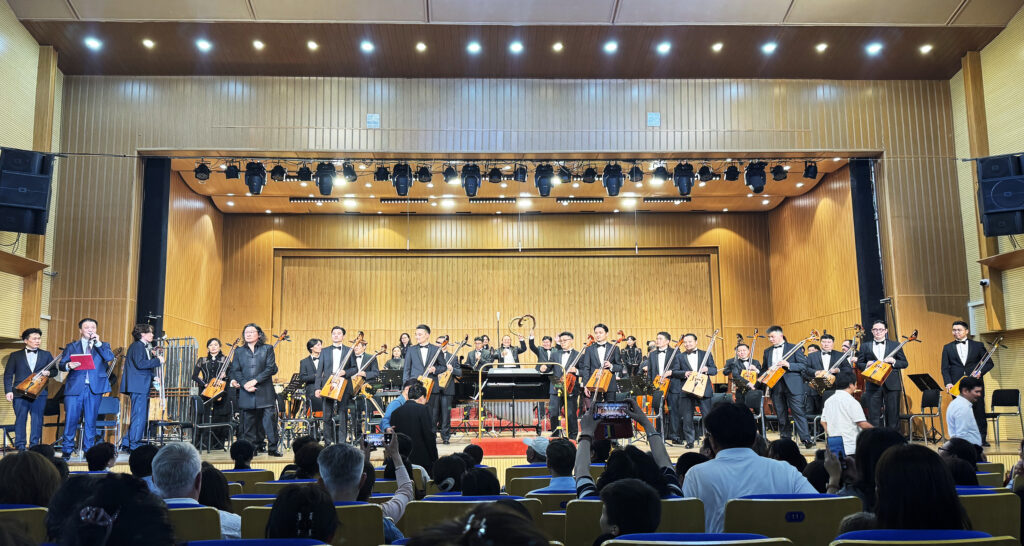
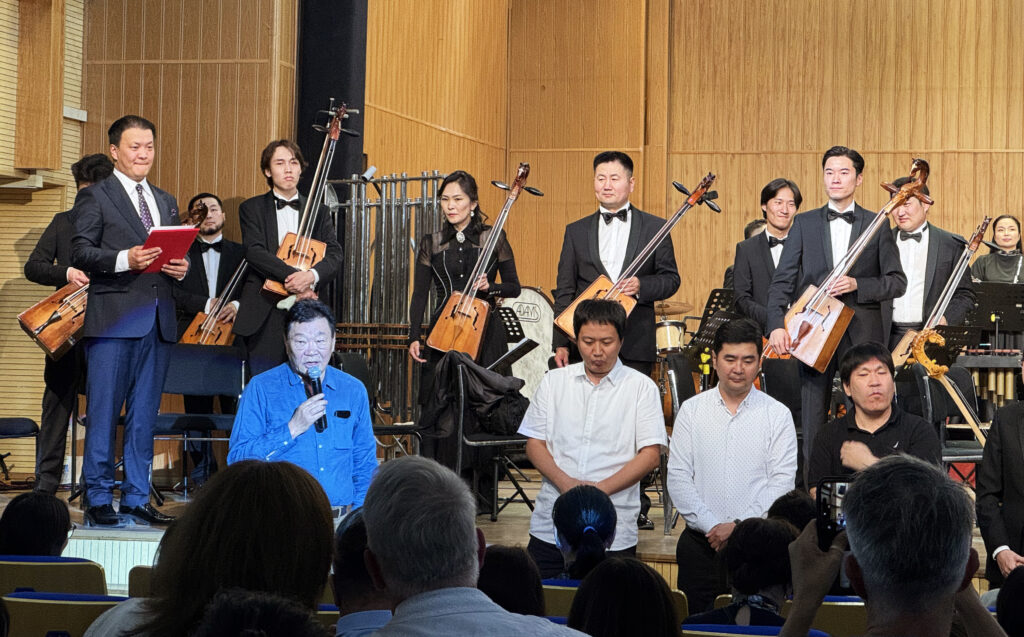
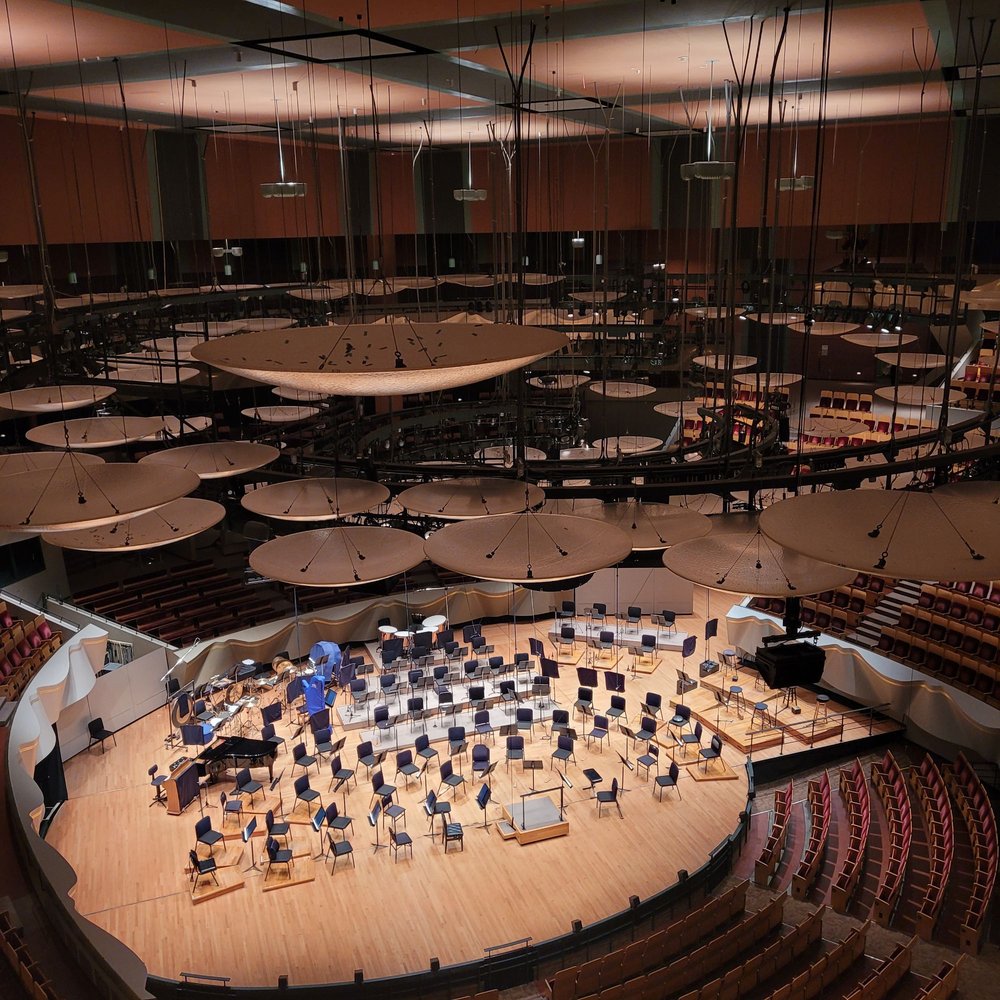
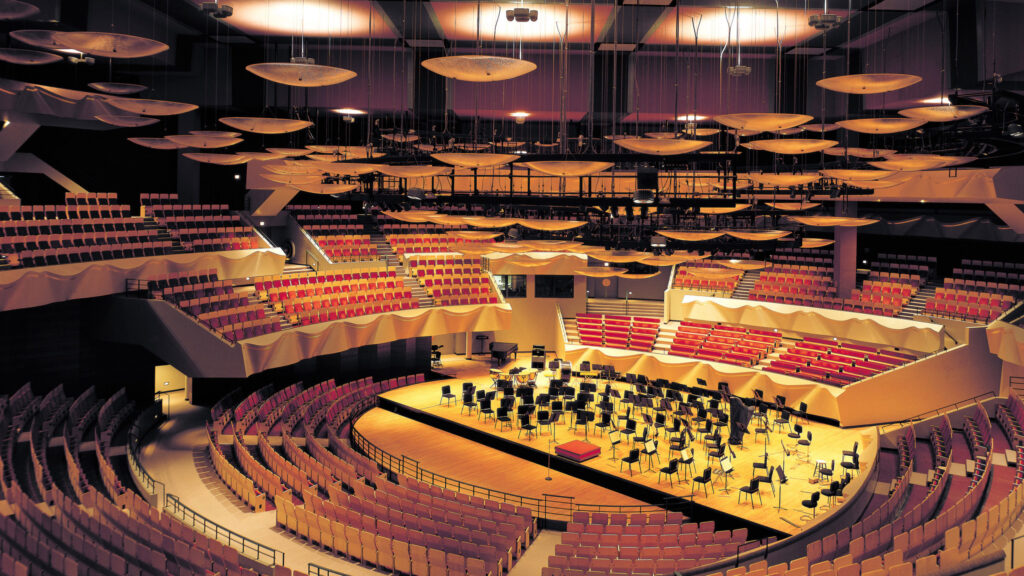
In this episode, we travel to Poland and explore its culture, history, geography, economic development, key sectors, Mongolian and Polish relations, and highlight the Presidential visit in March 2025.
The first episode of the Dafacto World series kicks off at Yokohama to south of Tokyo. The port at this city was where Japan’s journey to the new world began.
The Meiji era began in 1868 with Emperor Meiji being the 122nd Empreror of Japan. This year marked the opening of Japan’s doors to the outside world. Japan implemented modernization and Westernization to its soil during this 45-year period.
The emperor renamed the capital city Edo, which was the political and economic center of the country, to Tokyo in 1868. However, the bay of the city in the east and south side kept its name Edo.
Fukuzawa Yukichi, a man of englightenment who is portrayed on the ten thousand yen bill, said in his 1853 memoirs of Yokohama shores to the west of Edo bay that “one morning, the Japanese people were alarmed by the presence of massive dark ships in Yokohama, with some interpreting the event as the arrival of Black Devil”.
This was the arrival of 9 large ships commanded by the US captain M.Perry. The event caused a shockwave through Japan. The Japanese realized the sheer difference of power between the warships of other countries and Japan’s wooden ships, leading to the belief that they need to learn how to make those and get to know the West better.
The three centuries of Japanese isolation in Edo period was the underlying cause of this weakness. They immediately began relations with the US which masters making these massive ships. First, they sent their intellectuals and businesspeople to study. The unrestricted entry of foreign ships to the Yokohama port enabled the flow of foreign culture and information, introducing the Japanese to Western food and drinks, culture, and arts. Yokohama is often named as the birthplace of the modern Japanese culture.
Besides being a cultural hub, this city also laid the foundation of modern industries in Japan. The mass production of automobiles began in this city. Nissan built is manufacturing plant here in 1935 and set the record of producing 15 thousand cars within two years. The the first prototype was called Datsun Model-14. Now, a car called GTR is being developed, which can accelerate up to 340km.
Yokohama city is the capital of Kanagawa prefecture – one of the 9 regions and 42 prefectures in Japan. The city is developing rapidly.
Today, Yokohama is a major hub for industry and business in Japan, housing the headquarters of most Japanese corporations and boasting the country’s history of industrialization.
Thus, this harbor in Yokohama saw the fist steps of the great reforms leading to the rise ofJapan as the industrial powerhouse we know today.
The two bounds of Central Asia came together as traditional Turkish and Mongolian music wove a wreath of folk songs across time and distance last week at the Ulaanbaatar Theater. The crescent moon and its vibrant star reflected in the enchanting tunes of the saz – a long-necked lute – and the zurna – a woodwind instrument – against the background of the eternal blue sky.
Four folk music masters – Salih Gündoğdu, Eren Can Yıldız, Mücahid Kol, and Buğra Kutbay – from the Turkish capital, Ankara, in collaboration with the Ulaanbaatar Theater music ensemble, immersed the audience in an enthralling concert. The program consisted of lyrical and rhythmic Turkish traditional melodies played in the first half and lively Mongolian traditional music and dance performed in the second half. The evening ended on a spirited note with an arrangement of R. Bat-Erdene’s Mongolian contemporary classical piece, “The Gallop of Approaching Steeds,” by Ulaanbaatar Theater composer O. Chinbat for the Turkish quartet as the lead.

Palpable in the music was the nomadic spirit that upholds adaptability to change and reverence for freedom and nature as the traditional guiding principles in these cultures that emerged from nomadic roots. They are reflected in shared values such as efficacy in action and religious tolerance. Both Turkish and Mongolian folk melodies speak to the essential presence of nature in the impermanence of life.
The Sky Turks inhabited the land of the eternal blue sky between the 6th and 8th centuries AD and carved the first written use of the name Turk in ancient Turkic runes onto the Tonyukuk stone from the 8th century, located in the Tuul river valley.1 They worshiped Tengri, who symbolized the universe and its laws. This was the same Tenger deified five centuries later by Chinggis Khaan, the founder of the Mongol State. As two of the numerous steppe tribes to have originated in Mongolia, the Turkic and Mongol nomadic empires had a great influence on one another throughout various periods in history.
The Turkish musical scale called Makam Ussak is remarkably unique.2 It has more tonal variations in between notes than classical Western and Eastern harmonies. These microtones tend to make Turkish music sound sharper and higher in resonance by comparison to well-known Middle Eastern harmonies. Thus, the versatility of the tonal variations in Turkish traditional music carries a special expression of the richness in natural landscapes and cultural diversity that Turkey is blessed with thanks to its unique geographical location.
It is interesting to note that in the 13th century, the Mongol armies employed the beats of shamanic drums to prepare for battle.3 War drums were part of the Mongol military tactic to frighten the enemy from a distance before the start of a conquest.4 From the 14th century onward, the elite military forces of the Ottoman Empire refined the tactic into an entire art form. The Janissaries and their battle marches became so legendary that in the 18th century, their beats and rhythm inspired W. A. Mozart to write one of the evergreen favorites of classical music, the third movement of Sonata No. 11, better known as “The Turkish March.”
As Turkish and Mongolian musicians united in retelling the tales of brotherhood through music that evening, the crescent moon and its star shone brightly in the eternal blue sky. It was as though their songs soothed the souls and uplifted the spirits of listeners and wove a wreath of marvelous beauty across time and distance over the steppes of our ancestors.
References:
1. Weatherford, Jack. Genghis Khan and the Quest for God. New York: Penguin Books, 2016. (Chp. 3)
2. “The Difference Between Quartertones in Persian, Arabic, and Turkish Music.” YouTube, uploaded by OudforGuitarists, 16 May 2015, https://youtu.be/YCVFkircZUg. Accessed 10 April 2022.
3. Kappler, Claude-Claire et René. Guillaume de Rubrouck, Envoyé de Saint Louis: Voyage dans l’Empire mongol (1253-1255). Paris: Payot, 1985. (Chp. 35, Note 11)
4. Rustichello of Pisa. The Travels of Marco Polo, Vol. 1. Scotland: Yule-Cordier, 1902. (Book 2, Chp. 4, Note 3)
5. “The Differences and Similarities between Turkish and Western Music.” YouTube, uploaded by Atesh Electric, 16 October 2020, https://youtu.be/s4h0NdnOGQY. Accessed 10 April 2022.
6. Kultur Yasam. “11 Instruments Used in Turkish Music.” https://kulturveyasam.com/turk-muziginde-kullanilan-11-calgi/?fbclid=IwAR2hluVxYLKqyAY5K0cFOiFrpqaFsS48TOpi3lxFaFpjYvDwInDvNcCw4l8. Accessed 10 April 2022.
By Ariunaa Jargalsaikhan
Published in UB Post on April 15, 2022
Ulaanbaatar

French language, as a vehicle of culture and diplomacy, possesses a special combination of melodiousness and logic that structures thought and challenges critical thinking. The musicality of the French language has an elegant capacity to deliver powerful messages with lightness and grace. It is estimated that roughly over 400 million people speak French across North and South Americas, Europe, Africa, Southeast Asia, and beyond. No wonder, UNESCO gives prominence to French as its working language and promotes it by supporting Francophone cultures in different ways. The French language is like a key that opens doors to many countries.
On the occasion of the International Day of Francophonie on March 20, the French Alliance of Mongolia in collaboration with the Embassy of France and francophone partners widely organized a series of French language and culture events at various favorite cultural sights of Ulaanbaatar. For over two weeks, French language speakers and enthusiasts in Mongolia united in celebrating the richness in diversity of francophone cultures through music, theater, cuisine, literature, visual art, film, and more.
This year marked the 23rd time that the Festival of Francophone cultures was held in Mongolia. L’Alliance Française placed a great emphasis on youth and French language students, who actively participated in competitions of poetry, recitation, song, dictation, and composition. The first-place winners were awarded a week-long trip to Paris. The French language competitions contributed to the development of interest in French-language education for participants and helped viewers to expand their knowledge in different realms of culture, language, and art.
As Mongolian students stepped up to the challenge to showcase their talent and creativity on stage, the audience also cheered for the brave ones who persevered through mistakes until the very end. Overall, however, one could sense the necessity for the Mongolian education system to encourage more intellectual expression and creativity in schools instead of solely fixating on academic performance. In French culture, children are brought up from an early age to formulate their opinion, engage in debates over what is happening around them, and express freely how they feel. Such practices could serve well in developing the competitiveness of Mongolian youth in the future.
On the closing day, a festival gathered audiences for French music and opera at Sukhbaatar Square. Following the aftermath of the global pandemic, however, visitors were fewer than normally expected. Still, the cultural fair attracted a good number of individuals and united many like-minded people. Francophone organizations, institutions, restaurateurs, and businesses active in sectors of ecotourism, energy, agriculture, education and research, and science and technology partook in the fair. The windchill of a Mongolian spring day did not discourage participants from enjoying themselves under the sunny sky.
Relations between France and Mongolia go back to the 13th century, when French artisans, sculptors, and missionaries braved the cold and experienced the customs of people living across the Mongol Empire and made valuable contributions to the Mongolian cultural heritage and history. In modern times, France was one of the first developed countries to acknowledge Mongolia as an independent nation when the latter joined the United Nations in 1961. Currently, France continues to set an example as one of the leaders in strengthening the rule of law and combatting climate change in the world – both are vital issues for the development of Mongolia.
Francophone culture days are an important part of intercultural dialogue. They develop mutual understanding and create more harmonious relations among different cultures. The expression and awareness of the abundance of cultural diversity in society are significant markers of democracy and human rights. From Francophone days, we could reflect on new ways of celebrating cultural pluralism in Mongolia. Increased understanding and knowledge of diverse cultures raise the quality of life for a nation’s citizens. The enrichment of spirits and relationships for viewers, participants, and organizers also helps unite a nation.
In an era of globalization, intercultural dialogue plays a consequential role in protecting and treasuring cultural diversity. As information and technology bring human beings ever closer in contact with one another, the richness of identities shaped by a multitude of traditions and geographies thrives on open-minded communication. Intercultural dialogues serve as a proponent of peace. Lasting a few days, the cultural events might seem momentary when completed, but the impact on members of society can have lasting positive effects. They reduce negative stereotypes and prejudices that engender fear and conflict. Cultural days build trust and bring out kindness in people.
By Ariunaa Jargalsaikhan
Published in UB Post on March 30, 2022
Ulaanbaatar
This past week of November 17-21, 2021, an art fair featuring over 100 artists and 10 art galleries showcased fall season’s best and latest works. Seeing an eclectic array of art concentrated in one spacious venue at Misheel Expo was an unusual treat for art lovers. Though modest in promotion and size by comparison to internationally recognized art fairs, Ulaanbaatar’s Art Week signaled a promising pulse in an emerging art market. The question is, can the fair impact the market by attracting more prospective buyers?

The art fair was co-curated by 976 Art Gallery founder B.Gantuya and artist M.Erdenebayar. It was organized into three rows. The one closest to the entrance directed attention to contemplative video art, innovative conceptual installations, perceptive photographs, and intriguing sculptures from ceramic, wood, metal, fabric, ready-made objects, and other media.
In the middle row, beautiful photographs of traditional Mongolian still life, serene and soft-hued landscapes from the society of watercolor artists, and modern paintings with intricate lines and flattened perspectives by the Mongol zurag society created a cozy niche for visitors to engage in a creative workshop.
In the longest section, an exciting line up of large-scale abstract and modern paintings in acrylic and oil, galvanized the tall wall and booths with a kaleidoscope of impressive colors and arresting compositions, Mongolian themes predominating.
Finally, the open area designated for a rich variety of contemporary artworks including those from latest solo exhibitions of S.Sarantsatsralt, T.Enkhbold, Ts.Tuvshinjargal, L.Gawaa and many more, completed the captivating visual experience.

Observations
Emerging talents are attempting to embrace latest technologies and fuse western techniques with Mongolian subject-matter. These concepts are being increasingly pioneered by a growing group of foreign educated creatives. Another group of seasoned artists, including a wonderful circle of Mongol zurag painters and watercolor society members, continue to have significant influence over artistic trends. Finally, a burgeoning group of contemporary artists creating experimental works promise an exciting outlook on future movements.
Although abundant in diversity and talent, the Mongolian art market is at an infant stage. The residual effects of socialism’s non-transparent information and communication still reign heavily over a culturally sensitive market such as art. This makes it hard to collect and analyze data and history of facts and prices. It also exacerbates the widespread attitude of muted fear amongst the Mongolian stakeholders in ‘losing’ works to foreign markets. It seems to me that the solution lies in the government’s sufficient funding of public institutions of art. This would enable the museums to purchase artworks, enrich their collections, and keep the art within the country as they want. Furthermore, it would help ensure the success of great initiatives such as Ulaanbaatar Art Week down the road, because in-person art fairs are a major draw for prospective buyers from both public and private institutions.
Given the current state of the global economy in the aftermath of the pandemic, recouping could take a moment or two for art markets around the world, let alone Mongolia. For the time being, Ulaanbaatar’s Art Week has been a welcomed new occasion for art enthusiasts. It is worthy not only of an encore but also of an assessment. If fairly appreciated by all parties involved, the event can attract more buyers in the future.
By Ariunaa Jargalsaikhan
Published in UB Post on November 22, 2021
Ulaanbaatar

You may say I’m a dreamer
But I’m not the only one
I hope someday you’ll join us
And the world will live as one
– John Lennon, 1971
Ecological Art is a movement prompted by the manifold challenges of climate change. It was pioneered in the 1960s by artists such as Herbert Bayer, Joseph Beuys, Hans Haacke, Agnes Denes, Alan Sonfist, Helen and Newton Harrison, just to name a few. Eco Art emphasizes the interconnectedness between living species and their habitats. The artworks can directly contribute to the conservation and restoration of ecosystems, as well as raising awareness of cultural, economic, and political issues related to climate change.1
One of the major dilemmas in resolving the climate crisis is the linear “take–make–consume–dispose” approach to natural resources.2 For this reason, countries have begun to recognize the fundamental rights of nature as part of their constitutions. Initiated by Ecuador in 2008, this principle accepts that humans are part and parcel of nature, and not its independent proprietors.3 The rights of nature can endorse a new model of circular economy where each economic sector receives from and provides for another. The resulting networks eliminate waste by continuing the use of resources and develop like ecosystems do.
Still, modes of operation adopted from the advent of industrialization are proving difficult to change. Rapid urbanization increases the sense of human detachment from the price it costs to make the energy, transport, food, and goods we consume. Eco artists are agents of transformation in attitudes toward the use of natural resources.
Climate Change and Eco Art in Mongolia
Reverence for Mother Earth is deeply ingrained in Mongolian nomadic culture. However, following the growth in urban populations, these ecologically friendly traditions are gradually becoming forgotten. Mongolian artists have been reflecting the subjects of development, unregulated urbanization, and the loss of traditional culture in their artworks.

In mid-May, destructive sandstorms in southeastern aimags and heavy snow blizzards in northwestern regions of Mongolia swept over the country. “Mongolia is geographically located in an area where climate change is happening rapidly,” said Dr. D. Dagvadorj, founder of the Climate Change and Development Academy.4 According to the Paris agreement, countries must work to ensure global warming does not exceed an increase of 1.5°C relative to the temperature prior to the industrial revolution. However, Mongolia’s temperature increased on average by 2.3°C in 80 years since 1930, he says. Ecosystems are extremely sensitive to changes in temperature. The evaporation of moisture from melting ice glaciers in Mongolia will lead to drought, further depletion of groundwater, and the degradation of flora and fauna in the long term, he explained.
Eco Art is an influential agent of education, civic mobilization, and community activism. This spring, twelve graphic design students from the Mongolian Academy of Fine Arts and 111 children participated in the “Nogoonbaatar” (Green Hero) Eco Art Festival. Their art is a sobering reminder of the destructive impacts of greenhouse gas emissions. Below are just a few examples of their work:

Alongside children’s art, the “Nogoonbaatar” Eco Art Festival presented artworks by sixteen artists who turned the streets of a northern Ulaanbaatar ger district into a vibrant outdoor exhibition. The main site was once a wasteyard. Mr. S. Ulziitogtokh turned it into “Uulyn Park” in 2012 (Google maps mistakes it for Nogoon Nuuryn Park). The key attraction is a reservoir where neighborhood children can ice-skate in the winter and row boats in the summer.
When I met Mr. Ulziitogtokh, he had just been presented with two cherry blossom trees by a kind elderly gentleman. “Did you know that there are 1,000 different types of Sakuras and that two of them grow in Mongolia?” he asked me with enthusiasm. He has planted trees all around the reservoir and waters them regularly – that is how the lake stays clean. This year, he is working to turn the boathouse into a small community center for children, where they can read books and learn to play musical instruments.
The newly created artworks render the neighborhood a place full of color and character. The street is livened up with decorative murals by Ts.Tuvshinjargal and S.Batsaikhan, graffiti art by B.Ider (Ren) and O.Tuguldur, a mongol zurag mural by R.Chinzorig, mixed media prints on wood by J.Shijirbaatar, and printed illustrations by students A.Undramsan, B.Narankhuu and others. The messages in some of them are neutral and more decorative. Others depict scenes from nomadic traditions, children with happy faces and writings in Mongolian Cyrillic reminding viewers to “spread love.”
Still, messages in others are more cautionary and sardonic, showing images of childhood innocence set against pictures of smoke from powerplants, or the question, “What color is the sky?” written in a font that suggests a children’s book but placed in the foreground of a suburban scene with a black sky. The eclectic collection of artworks turns the street into an unconventional gallery that tickles the minds of passers-by in spite of themselves.
Inside the park, artworks enhance the fun and friendly atmosphere for children and invite visitors to enjoy the views of the lake from various vantage points. Paintings by Ts.Ariuntugs and M.Batzorig, ceramic sculptures by D.Otgonbayar, sculptures from recycled metal, wood, and other materials such as mirrors, bicycles by T.Enkhbold and plastic by R.Luvsandorj enrich the imagination and channel creative inspiration. There are unique sculptures that pay heartfelt homage to childhood in Sunny Rain by E.Tsagaantsooj and B.Bat-Erdene, and endangered wildlife in Spirit by M-Munkh-Erdene.

One can play basketball at fun-size hoops in the shape of trees created by E.Jantsankhorol. They will chime when you score, as the ball collides with tiny bells attached to the net. Everyone is happy when you score your green goals. On top of the hill, overlooking the lake, N.Amarsaikhan’s gregarious bench with an impressive mane of windfallen trees will embrace visitors. If they’re nice and gentle, it might show them green visions through its eye.

The Impact of Eco Art
Witnessing new life be given to discarded fruits of human genius – from bottle caps to bicycle wheels – felt a bit phantasmagorical. A time-travelling ceremony where artists saluted scientists seemed to have taken place. Staggering images emerged. The bottle caps and plastic are over 100 years old. The wheel is about 1,000 years younger than civilization, which is 6,000 years old. All of this is similar to blink of an eye in the 4,499,994,000 years it took for our planet to produce civilization. We are like a speck in nature’s timeline. Yet our collective sense of entitlement to natural resources has grown larger than nature itself.
Although the climate crisis presents a colossal challenge, thanks to scientists and ethical leaders, we can accomplish what children and artists instinctively know. We need to leverage the collective wisdom and reform our approach to progress by going with, not against, nature.
Education in Mongolia needs to be regarded not only as a discipline but also as an emotional and physical outlet for kids to learn, play, experiment, and share. Such a culture can smooth the path for interdisciplinary cooperation between scientists and artists, R&D and business clusters.
At the festival, artists, teachers, and environmental experts Jitka Kopejtková and David Strauss from the Czech Republic, Julien Malland (Seth Globepainter) from France, and Julia Neuhaus and Christian Escher from Germany, shared their valuable know-how. Christian Escher’s insight stood out as an important warning in Mongolia’s road to prosperity:
“Economic development usually means more environmental impact, at least in the way that economic development works at the moment. It simply means more consumption and with that, more use of plastic, more emission of greenhouse gases, more intensive agriculture and loss of biodiversity. I am aware that it is unfair to ask less developed countries to go a different route of development. The point is, this development is a trap!”5
Mongolia, as a developing country, is learning from the experiences of industrialized nations. Challenges of climate change present an opportunity for Mongolia to develop wisely. We need to embed the concept of a circular economy into future strategic sectors from the beginning. Waste and water recycling plants could be built with these ideas in mind. To accomplish this, we need to rehabilitate our culture from corruption and support private sectors in innovative businesses by providing startup investment.
Prosperous countries allocate a major portion of their funds into providing the legal framework for developing and deploying new technologies.6 Economist Hakan Gergils in Dynamic Innovation Systems in the Nordic Countries? wrote, “In 1999, the USA was more than three times as good as the EU at exploiting scientific advances for commercial ends.” This suggests that innovation is one important key to development by way of solving problems.
Within a half a year after the global outbreak of COVID-19, Mongolian scientists invented a pain-free test for the virus infection. Due to general disbelief and absence of solid frameworks for exporting scientific innovations to international markets, Mongolia lost a fantastic opportunity to alleviate suffering and make profit from its discovery. This oversight reveals that innovators and creators in Mongolia need to be valued and integrated into the economy.
There is no denying that system reforms and investments into development of new technologies are initially expensive, but cost-effective in the long term. That is why Mongolia must begin to allocate the revenues from the extractive sector into research and development of a circular economy to develop and help relieve climate change at the same time.
Eco Art is changing our attitude toward consumption of natural resources and creating a new culture of harmony with nature. If artists and scientists collaborate in future Eco Art Festivals, we can come up with more ideas to help save our home – the planet Earth. Our survival depends on it.
References:
1. Weintraub, L. To Life!: Eco Art in Pursuit of a Sustainable Planet. University of California Press, 2012. Internet Archive, archive.org/details/tolifeecoartinpu0000wein.
2. Complexity Labs. “The Rise of Sustainability.” YouTube, uploaded by Systems Innovation, 20 August 2019, https://youtu.be/bjrPiIem30g.
3. Crimmel, H. “The Rights of Nature: A Global Movement.” YouTube, uploaded by Issac Goeckeritz, 31 May 2020, https://youtu.be/kuFNmH7lVTA.
4. Dagvadorj, D. “Нэгж бүтээгдэхүүн үйлдвэрлэхэд ялгаруулж байгаа хүлэмжийн хийгээрээ манайх дэлхийд эхний аравт ордог.” Interview by B.Yanjmaa. Өдрийн сонин, no. 098 (6720), 18 May 2021, Pg. 11.
5. Escher, C. “I believe that all fundamental change starts with cultural change.” Interview by E.Erdenejargal. MONTSAME, 28 April 2021. https://montsame.mn/en/read/262036?fbclid=IwAR0CMHsHKR7Nywpr4ExsLsg750kbUqrjDF674l-9dlMnni7JO929vwtzAHo.
6. Gergils, H. Dynamic Innovation Systems in the Nordic Countries?. SNS Förlag, 2006.
7. Khantushig, B. “Degraded Pasture Leads to Poor Quality Meat.” UB Post, no. 055 (2307), 17 May 2021.
8. Enkhnaranjav, T. “Improper Battery Disposal Poses Serious Environmental Hazards.” UB Post, no. 055 (2307), 17 May 2021.
9. Bazarsad, L. “Дугуйгаас дөрвөлжин рүү.” YouTube, uploaded by Bazarsad Lhagva, 4 June 2021, https://youtu.be/ign_ih_0zgs.
10. Neuhaus, J. “Art needs an audience. A picture on the wall is just acrylic paint, unless nobody is realizing that there was somebody who put an idea into form.” Interview by E.Erdenejargal. MONTSAME, 30 April 2021. https://www.montsame.mn/en/read/262369?fbclid=IwAR2w3PX30B-vIdalFuaDN3rUlrIN6Y3LGZtGR8Ievw9IkT5sFbuxs2iHMLk.
11. Malland, J. “I always thought that the best qualities of an urban artist are observation, understanding and adaptation.” Interview by E.Erdenejargal. MOTSAME, 30 April 2021. https://montsame.mn/en/read/262355?fbclid=IwAR25YYsRZLUaNny0vQtI_9C6dZWrVeMq87BHajtrU3zc8xwptnu1SmXx5fw.
12. Jargalsaikhan, D. “Sanhattan.” Jargal Defacto, 28 April 2010. https://jargaldefacto.com/article/sanhattan.
13. Jargalsaikhan, D. “Heading Towards Chile.” Jargal Defacto, 20 March 2020. https://jargaldefacto.com/article/heading-towards-chile.
14. Jargalsaikhan, D. “Free Up Prices and Dismantle Monopolies.” Jargal Defacto, 15 February 2017. https://jargaldefacto.com/article/free-up-prices-and-dismantle-monopolies.
15. Jargalsaikhan, D. “Commons.” Jargal Defacto, 4 April 2020. https://jargaldefacto.com/article/commons.
16. Jargalsaikhan, D. “Batteries and Toxic Hazards.” Jargal Defacto, 6 August 2019. https://jargaldefacto.com/article/batteries-and-toxic-hazards.
17. Jargalsaikhan, D. “Агаарын чанар.” Jargal Defacto, 24 February 2010. https://jargaldefacto.com/article/agaariin-chanar.
18. Jargalsaikhan, D. “Модон жорлон ба Монголын ирээдүй.” Jargal Defacto, 28 October 2015. https://jargaldefacto.com/article/modon-jorlon-ba-mongoliin-ireedui.
19. Hasegawa, K. “Art for SDGs: Kitakyushu Art Festival – Imagining Our Future.” Studio International, 4 May 2021. https://www.studiointernational.com/index.php/art-for-sdgs-review-kitakyushu-art-festival-imagining-our-future-japan-sustainable-development-goals.
20. Leopold, A. A Sand County Almanac. Oxford University Press, 1949.

By Ariunaa Jargalsaikhan
Published in UB Post on June 11, 2021
Ulaanbaatar

Part 1 of 3
Much of East Asian art history is undeniably linked to Buddhism, and Mongolia is no exception. The gilt-bronze sculptures of Gombodorjiin Ishdorj (1635–1723), better known as Undur Gegeen Zanabazar, a 17th-century Mongolian Head of State and Faith, are an integral part of Buddhist art history.
His sculptures express the human and divine qualities of the Buddha in exquisite harmony. They constitute valuable evidence of the culmination of diverse artistic traditions, styles, and techniques that were refined since the Yuan dynasty1 and concentrated in an extraordinary union of visionary talent and craftsmanship.
In general, Zanabazar’s Buddha sculptures are approximately 70 to 90 centimeters tall. They are usually seated, except for a few (e.g., Manzushri and Maitreya). The gilt-bronze sculptures are hollow2 and were possibly created through the lost-wax casting process. Their proportions adhere to the traditional Buddhist principles of ancient Indian iconometry. The Mongolian stylistic innovation is perhaps most prominent in the facial features, which are accentuated by their perfect symmetry.
One could describe Zanabazar’s Buddhas as having almond-shaped eyes with a beautifully serene, contemplative gaze; a youthful, rounded face with full cheeks; thin, curved eyebrows that gradually meld into the bridge of a slightly curved nose; a barely perceptible smile on the lips, which are not too much wider than the base of the nose; and elongated earlobes, stretched down by heavy earrings – characteristic of the Buddha’s good fortune.
Most sculptures have long hair, the top portion of which is usually swept up to form part of the sumptuous headdress with a magnificent crown. The long hair denotes the earthly roots and human beginnings of the Buddha. The hair is painted with a blue mineral pigment, which symbolizes eternity in Mongolian artistic traditions.3

The idealized, full-dimensional body has a fit physique with a straight posture. The figures are dressed in fine silk on the bottom; a delicate ribbon-like sash drapes over one or both shoulders. The sculptures are adorned with stunning jewelry on the neck, arms, ankles, and waist. The Buddhas are commonly seated on a lotus throne, symbolizing the purity of an enlightened mind arising from suffering.
Meditation is one of the central practices of Buddhism. Focusing on the body trains the mind to respond – rather than to react – to emotional stimuli. The five Dhyani Buddhas of Wisdom help guide the mind toward awareness of emotions to transform them into more helpful ways of thinking. For example, ignorance can be redirected toward the discovery of greater wisdom, anger to clarity, pride to inclusiveness, lust or greed to discernment, and jealousy or envy to betterment.
Zanabazar’s outstanding sculptures of the Buddha’s famous five forms render the practice of visualization in meditation more approachable. Their lifelike portrayal calls to mind that Buddha himself was an ordinary human being. In Zanabazar’s sculptures, the Buddha’s contemplative gaze and gentle, inviting smile seems to say, “I have these thoughts too, sometimes. Let’s have a look together.”
Each of the five Buddhas of Wisdom are distinguished by their hand gestures or mudras, and are associated with different colors, symbols, senses, elements, universal directions, and organs.4 The mudras of Zanabazar’s Dhyani Buddhas seem to be more distinct than their other aspects. Ratnasambhava, who converts pride and miserliness into Wisdom of Equality, makes a gesture of giving. Vairochana, who transforms ignorance and delusion into All-Encompassing Dharmadatu Wisdom, makes the gesture of turning the Dharma wheel. Akshobhya, who illuminates anger and hatred to reveal Mirror-Like Wisdom, is touching the Earth with his right hand. Amitabha, who transmutes lust and greed into Discriminating Awareness Wisdom, rests his hands in a gesture of meditation. And Amoghasiddhi, who turns jealousy and fear into All-Accomplishing Wisdom, holds his right hand up in a gesture of fearlessness.


Zanabazar’s sculptures are like a visual symphony that soothes the restless soul. His five Dhyani Buddhas help us understand the power of meditation. The artworks suggest that stillness and reflection are as vital to success in life as action and movement. In this sense, Zanabazar’s art seems to revisit the meaning of liberation, reimagine beauty, and redefine strength.
Research remains to be done to determine the total number and locations of Zanabazar’s artworks and to organize them by date. Information on how the artworks survived the turbulence of history since the 17th century has yet to be documented. A multitude of Buddhist gilt-bronze sculptures, equally valuable in their own merit, were created since Zanabazar. They are collectively known as the artworks of the School of Zanabazar.
In his lifetime of 88 years, Zanabazar created some of the most iconic and enduring works of Buddhist art ever seen. His ingenious talent and ability to express the human and divine qualities of the Buddha later defined him as one of the founders of the Mongolian Buddhist cultural renaissance.5 Zanabazar was undoubtedly the most significant artist and intellectual leader of 17th-century Mongolian culture and beyond. His timeless creations continue to exert a powerful hold on viewers to this day.
Undur Gegeen Zanabazar’s Five Dhyani Buddhas of Wisdom can be viewed in the Zanabazar Museum of Fine Arts, except for Ratnasambhava, the Buddha of the South. Ratnasambhava’s sculpture is located in the Choijin Lama Museum.
References
- Syrtypova, S.-K., D. Zanabazar’s Style of Buddhist Art (Using Examples from the Collection of A. Altangerel). Ulaanbaatar: Admon Print, 2019. Pg 13.
- Sarantuya, U., et al. Г. Занабазарын Нэрэмжит Дүрслэх Урлагийн Музейн Дэлгэрэнгүй Тайлбар. Ulaanbaatar: Askpoint, 2012.
- Battulga, B. “Монгол Зураг.” Institute of Teacher’s Professional Development in Mongolia. Bagsh.itpd.mn. http://bagsh.itpd.mn/fayluud/mungolZuragUrlal.pdf. Accessed 02 April 2021.
- Lee, M. “Symbolism of the Five Wisdom Buddhas.” Lotus Happiness, August 11, 2019. https://www.lotus-happiness.com/symbolism-five-wisdom-buddhas/. Accessed 18 April 2021.
- Tsultem, N. The Eminent Mongolian Sculptor – G. Zanabazar. Ulaanbaatar: State Publishing House, 1982.
- Mongolian National Commission for UNESCO. In Commemoration of the 360th Anniversary of Undur Geghen Zanabazar, the First Bogdo Zhivzundamba Hutugtu, the Mongolian Great Enlightener, Outstanding Spiritual Leader and Statesman. Ulaanbaatar, 1995.
- Saruul, N., Sarantuya, U., Munkhzul, J., and Tsedmaa, D. The Fine Arts Zanabazar Museum–Unique Masterpieces. Ulaanbaatar: Admon Print, 2013.
- Bartholomew, T. T. “Introduction to the Art of Mongolia.” Asiantart.com, September 7, 1995. https://www.asianart.com/mongolia/introduct.html. Accessed 02 April 2021.
- Uranchimeg, Ts. “Хоc ёсны сургаалаар бүтсэн Хүрээ хийдийн урлаг.” YouTube, uploaded by American Center for Mongolian Studies, 22 January 2021, https://youtu.be/iZq-d802av0.
- Otgonbaatar, R., and Soninbayar, Sh. “Өндөр Гэгээн Занабазар.” YouTube, uploaded by TheAaraa, 07 April 2020, https://youtu.be/3bT5UGdeqHI
- Ward, W. E. “The Lotus Symbol: Its Meaning in Buddhist Art and Philosophy.” The Journal of Aesthetics and Art Criticism, vol. 11, no. 2, 1952, pp. 135–146. www.jstor.org/stable/426039. Accessed 9 Apr. 2021.

By Ariunaa Jargalsaikhan
Published in UB Post on May 7, 2021
Ulaanbaatar
Part 1 of 2
About 470km South East of Ulaanbaatar, a towering eight-meter bronze sculpture of a scorpion looks out onto the intersection of three roads that scatter in separate directions like the thin traces of a firework over a boundless space of golden dust. They are but a small burst of countless trails that extend over the mystical land of Northern Shambhala, the legendary kingdom of earthly paradise. It is said that abundance, peace and enlightenment can be achieved in this kingdom. Its territory is shaped like the lotus flower with eighteen petals. In each of them, a particular art or a science of the inner or outer universe have been cultivated to perfection. The infinite repository of Shambhala’s riches is replenished by the planets and the stars. It can be accessed by the human mind and spirit. (G. Mend-Ooyo, 279)
Danzanravjaa’s Mission to Shambhala
About 200 years ago an extraordinary man, whose totem animal was the scorpion, devoted his life to restoring Shambhala and liberating people from pain and suffering. At that time, the Manchu Qing rule had been wielding divisive politics to weaken Mongolia’s relations and exerting pressure in the form of religious and monetary constraints repressing Mongols for over two centuries. Dulduityn Danzanravjaa created knowledgeable communities, built monasteries, libraries, schools, museums, and a theater to empower ordinary people of the Gobi. He was a composer, a playwright, and an author of some 500 poems and songs in Mongolian, Tibetan and Sanskrit. He was a healer and a teacher who circulated Buddhist wisdom in comprehensible and memorable verse. He was also a visionary who foresaw that the changes in the coming 20th century would cast a heavy burden on many people including those on a mission to enlightenment.
The Mongolian word “khutagt,” originating from Sanskrit “arya” and Tibetan “phagpa,” is a title given to persons whose spirits have “transcended the ordinary life” and have attained freedom from worldly attachments. According to Buddhist tradition, they reincarnate into this life to awaken individuals to enlightenment. They are creators who were born to give to instead of take from this world. Their talents and abilities are often revealed at a young age. (P. Badral, 1)
As for Noyon Khutagt Danzanravjaa, it was determined that he knew something about the mysterious ways of the world when at the age of six or seven he spontaneously recited his poem on the inevitability of death regardless of social status or age to an audience of wealthy Gobi nobles in 1810.
The Wisdom of the Scorpion
Spirits live in every animate and inanimate parts of nature. According to Mongolian tradition, the scorpion belongs to the realm of the Water spirits. The scorpion is a nocturnal animal whose ancestors inhabited the waters of the Earth some 430 million years ago. To this day, the fossils of ancient 2.5-meter-long sea scorpions reflect a mysterious fluorescent glow. In the Gobi Desert, the scorpion is feared and respected for its reminder of the truth. The truth that the soul knows – the truth that endures time-bound beliefs, ambitions, and judgements – the truth that says, the only constant in life is change.
Like his totem animal, Danzanravjaa taught the lasting truth that the soul knows, to help people understand that freedom and peace were attainable in their lifetime. In his poems and songs, he often refers to the Buddhist principle of Shunyata. In Mongolian it is known as “khooson chanar,” emptiness that constitutes ultimate reality. It is the quality of no-mind, no-thing. Danzanravjaa’s famous song, “Ulemjiin Chanar” (The Quality of Perfection), is about this principle, and not just about romantic love as some people mistakenly believe. (N. Enkhbayar in Д. Равжаа Судлалын Тойм, Vol. 2., 119) This song is about the idea that what makes up the soul also makes up the universe, so that the soul exists in relation to the world it exists in. Therefore, so long as the universe exists, the soul will continue to exist because both are one and no-thing at the same time.
Truth and Death
Danzanravjaa’s first known poem recited in 1810 to wealthy Gobi nobles referred to the idea that worldly desires of gaining power, money and fame are ultimately superfluous because they instill fear, greed and envy in others. What matters is living mindfully, compassionately, purposefully. Filling others’ memories of us with gratitude for having known us in their life. Buddhists believe, this will help the soul in its rebirth.
In 1781, Immanuel Kant wrote in the Critique of Pure Reason, “we may adduce the transcendental hypothesis that all life is properly intelligible, and not subject to changes of time, and that it neither began in birth, nor will end in death. We may assume […] that if we could intuite ourselves and other things as they really are, we should see ourselves in a world of spiritual natures, our connection with which did not begin at our birth and will not cease with the destruction of the body. […] This hypothetical procedure is in perfect conformity with the laws of reason.” (I. Kant, Chp. 1, Section 3)
What Kant referred to is similar to the philosophy of major religious traditions originating from the great Indian cultures. They too suggest that the soul is infinite, that there is a universal intelligence, which human reason is part of, and by which cycles of life, death and rebirth abide. Buddhism explains that we experience suffering because we struggle to die unto the self that faces a fundamental challenge.
Our dissatisfaction with life arises from our own desire to control the impermanent quality of the universe while having forgotten that we too are part of its impermanence. Death walks next to every sentient being. Rebirth to a new outlook on reality is painful. But once we accept it, we could be relieved of our suffering as death becomes the pathway to enlightenment. If we could understand that all one needs to do is accept things as they are, then liberation will come naturally from the recognition of this truth. Nirvana, therefore, can be attained by living in harmony with the truth of death.

Preservation of Danzanravjaa’s Legacy
Shortly before he died in 1856, Danzanravjaa appointed one of his trusted students, Balchinchoijoo, to take care of his valuables, manuscripts, and creations. Balchinchoijoo was instructed that the heir to this role as a guardian (takhilch) would be born with a distinguishing birthmark. Danzanravjaa knew that a time was approaching when people may be persecuted for mentioning his name, let alone his legacy. He foresaw that his work may be displayed later in a museum where future generations could remember him. Five generations of takhilch after Balchinchoijoo had meticulously preserved the treasure trove bequeathed by Danzanravjaa in 1500 large wooden trunk chests.
The treasures were kept safe in a monastery until the Great Repression when Buddhist monasteries throughout the country were set on fire. In 1938, the seventh takhilch, G. Tudev, was able to save 64 chests. He moved them out in the middle of the night by himself and buried them in secret locations. During the communist era Takhilch Tudev became a carrier of goods by caravan and memorized passages from Lenin and Stalin’s books so as not to raise any suspicion. Secretly, he trained his grandson Z.Altangerel, who was born with the distinguished birthmark, to care for the remaining hidden treasures. After the 1990 revolution, Takhilch Altangerel dedicated his career to rehabilitating Danzanravjaa’s legacy, rebuilding his monasteries and reopening Danzanravjaa’s museum.
Danzanravjaa Studies
In 2006, UNESCO celebrated the 150th anniversary of the death of Danzanravjaa. Their official statement read, “A Buddhist thinker with many talents, ranging from music to architecture and philosophy to the theater, Danzanravjaa Dulduitiin exerted an important influence on thought and culture, well beyond the borders of Mongolia. His vast body of work is now being rediscovered with the renewal of traditional Mongolian culture.” (UNESCO, 24)
In the late 1950’s, famous Mongolian writer, Ts. Damdinsuren, participated in the unearthing of the treasure chest that happened to contain the theatrical costumes from Danzanravjaa’s opera. Thus, Damdinsuren pioneered Danzanravjaa studies. Cautiously, so as not to upset the authorities, the tone in early significant Danzanravjaa research by Mongolian scholars usually criticizes the luminary’s “feudal” and “outdated” views.
In recent years, considerable scholarship and analyses have been devoted to Danzanravjaa’s poetry and literature. However, some popular interpretations of his philosophy, especially on meditation and love, risk being too literal or one-sided. (L. Khurelbaatar in Д. Равжаа Судлалын Тойм, Vol. 2, 53) This further exacerbates the public confusion of his philosophy with the negative stereotypes initiated by Danzanravjaa’s ideological rivals. Still, much research needs to be done on his work as a composer, painter, sculptor, architect, playwright, pedagogue, Buddhist, philosopher, healer, astronomer, biologist, geographer.
Today, schools and publications freely cite Danzanravjaa’s unique legacy. We may never know what was in the 1436 treasure chests that were lost to the Great Repression. But thanks to the 64 existing treasures, we have only begun to understand the scope of Danzanravjaa’s life, his mission and work.
We may not fully comprehend the reality in which souls in afterlife or the kingdom of Shambhala exist. But we know of a remarkable man who knew that they exist. He created many wonders because he lived for the purpose of awakening ordinary people to that reality. He sang prayers for the compassion and reverence of all of Nature’s sentient beings. The truth that Danzanravjaa knew will continue to resonate in people’s minds and spirits like the lights of a supernova that travel for hundreds and thousands of years.
References:
1) G. Mend-Ooyo. Гэгээнтэн. Ulaanbaatar: Munkhiin Useg, 2012.
2) G. Tsedevdorj. Д. Равжаа Судлалын Тойм, Vol. 2. Ulaanbaatar: Bambie San, 2014.
3) Kant, I. Critique of Pure Reason. Book II. Transcendental Doctrine of Method. Translated by J.M.D.Meiklejohn. Project Gutenberg, 2003.
4) P. Badral. Агнистын Гэгээ Цуврал, Vol. 3 Үлэмжийн Чанар. Ulaanbaatar: Nepko, 2016.
5) UNESCO. Celebration of Anniversaries with which UNESCO will be associated in 2006-2007. Paris: UNESCO, 2006.
6) Z. Altangerel and Ch. Khatanbaatar. Өвөрбаясгалант Хамарын Хийд. Ulaanbaatar: 2012.

By Ariunaa Jargalsaikhan
Published in UB Post on January 11, 2021
Ulaanbaatar